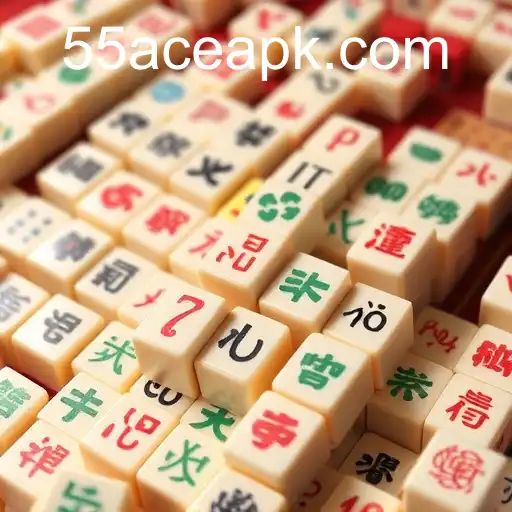
The Rich History and Culture of Mahjong
Mahjong, a traditional Chinese game, has captivated players around the globe with its intricate blend of skill, strategy, and luck. This tile-based game is typically played by four players and involves drawing and discarding tiles to form winning combinations known as "melds." As intriguing as the gameplay itself is the history and cultural significance of Mahjong, which has evolved over centuries to become a beloved pastime in many parts of the world.
The Origins of Mahjong
The exact origins of Mahjong are somewhat shrouded in mystery, with various theories suggesting that it dates back to ancient China. Some believe that the game was inspired by popular card games played during the Qing Dynasty. Others think that it developed from a game resembling dominoes used by fishermen in ancient times. Despite these varied narratives, what is clear is that Mahjong emerged as a staple of Chinese culture by the late 19th century, gradually gaining widespread popularity.
The standard version of Mahjong that most are familiar with today likely took shape around the late 1800s, before spreading to the United States and other Western countries early in the 20th century. As it spread, there were numerous adaptations to the game, leading to the diverse rule sets seen around the world.
How Mahjong Is Played
The game is played with a set of 144 tiles based on Chinese characters and symbols, though different regional variations may have slightly different tile sets. The basic goal is to build a hand composed of four melds and a pair, making up 14 tiles in total. A player draws and discards tiles in turn while trying to match their pieces into sets or runs before the others.
Understanding the types of melds is crucial in Mahjong: a "pung" is a set of three identical tiles, a "kong" is a set of four identical tiles, and a "chow" is a sequence of three consecutive numbers in the same suit. These basic combinations form the foundation of a winning strategy, demanding a blend of strategic planning and real-time adjustment to opponents' actions.
The Influence of 55Ace on Mahjong
The term "55Ace" might puzzle traditional Mahjong players, yet in the modern context, it has become associated with innovative strategies and platforms that have revitalized interest in the game. In a digital era where online gaming platforms flourish, 55Ace has become synonymous with uniting Mahjong enthusiasts through feature-complete gaming environments. It's crucial in engaging younger generations in this classic pastime.
In the online sphere, 55Ace serves as a nod to combining traditional gameplay with modern technological conveniences, offering both seasoned and novice players the opportunity to dive deep into Mahjong's rich tapestry of playstyles and tactics.
Mahjong's Global Spread and Cultural Impact
As Mahjong journeyed across borders, it assimilated into various cultures, each adapting the game's rules and practices to fit their regional sensibilities. In Japan, Mahjong has become a fixture in both casual social gatherings and competitive tournaments. Similarly, in the United States, Mahjong gained traction particularly among Jewish American women in the early 20th century, becoming a social staple within these communities.
The game of Mahjong also intrigued Western audiences, who were fascinated by its exotic nature and elaborate rules. This global exploration led to the establishment of international Mahjong associations, which formalized competitions and standardized rules to create a universally recognized format for tournament play.
Strategies and Techniques for Mastering Mahjong
While the allure of Mahjong lies in its apparent simplicity, achieving mastery requires a deep understanding of various strategies and techniques. Players need to be adaptable, observing opponents' discarded tiles to deduce their potential hands and adjust their tactics accordingly.
Advanced players often employ techniques such as "defensive play," focusing on disrupting opponents' hands rather than aggressively building their own. Additionally, memorizing tile patterns, practicing efficient tile management, and learning how to quickly assess hands are skills that differentiate seasoned players.
The concept of "55Ace" in this strategic context represents the modern approach to accessing countless resources, guides, and communities that aid players in honing their skills. It's not just about winning or losing but about engaging with a broader community of Mahjong enthusiasts and embracing the long-standing traditions this game offers.
The Future of Mahjong
In looking ahead, Mahjong stands poised for a resurgence along multiple axes—through technological innovation, cultural exchange, and the ever-present allure of a game that's both timeless and adaptable. The cross-generational appeal of Mahjong ensures its continued relevance, and platforms like those referenced by the "55Ace" phenomenon play a pivotal role in uniting players, fostering growth in the community, and ensuring that Mahjong remains a cherished global pastime.
Whether you're a curious beginner or a seasoned veteran, the world of Mahjong offers a rich tableau upon which players can craft their narratives, strategies, and friendships. As both a traditional cultural fixture and a modern competitive pursuit, Mahjong's legacy continues to grow, ensuring its presence in the global gaming landscape for years to come.